Overview
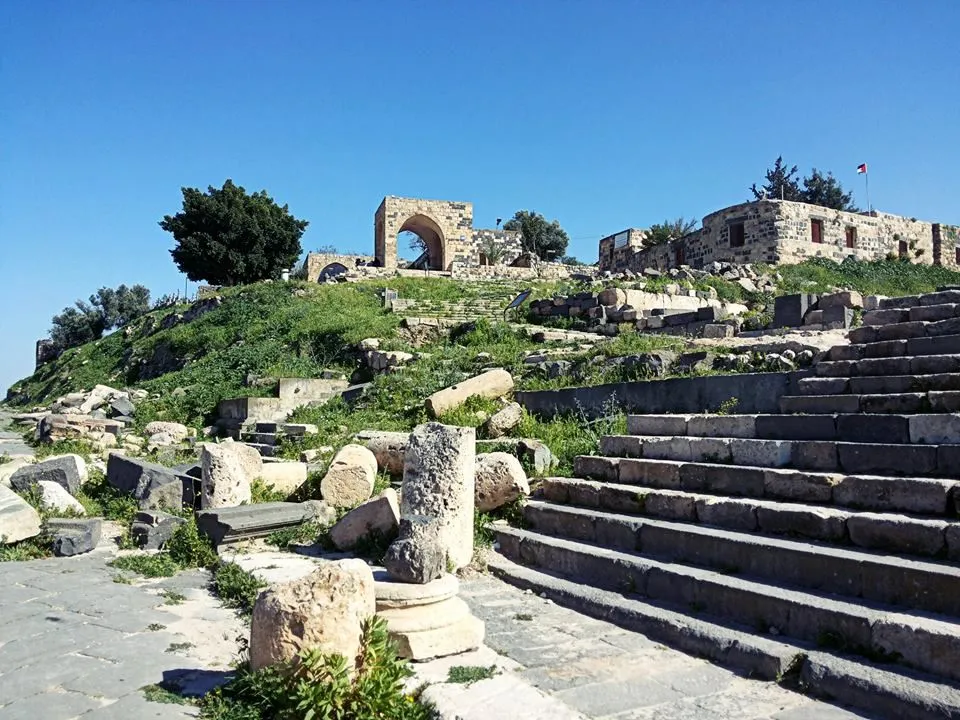
Umm Qais is home to Jordan's most striking black basalt ruins — the
remains of ancient Gadara, a city of philosophers and poets built from dark volcanic stone. Its
Roman theatre and colonnaded streets sit above one of Jordan's most dramatic viewpoints,
looking out over the Sea of Galilee, the Yarmouk River, and the Golan Heights.
Umm Qais sits at the crossroads of civilization, where history, landscapes, and cultures meet. It is a place where you can walk through thousands of years of history while standing above three countries at once.
History of Umm Qais (Ancient Gadara)
A City of Philosophers, Poets & Power
Gadara was one of the Decapolis Cities a group of ten Greco-Roman cities known for their cultural and political importance.
Hellenistic Period (Around 3rd Century BC)
- Founded by the Greeks after the conquest of Alexander the Great
- Became a center of learning, philosophy, and arts
- Home to renowned poets and thinkers such as Menippus and Theodore
Roman Era
Under the Romans, Gadara flourished:
- Built grand roads, theaters, colonnaded streets, and public baths
- Became a vibrant urban center with strong architectural identity
- The city’s famous black basalt stones define its look today
Byzantine & Islamic Periods
- Byzantine churches and Byzantine-era mosaics still stand
- Islamic rulers introduced new structures and preserved some older ones
- Earthquakes and time reshaped the city, but its beauty remains
Top Attractions in Umm Qais
1. The Black Basalt Theater
A magnificent Roman theater built entirely from black basalt stone one of the pocos examples in the world.
- Seated nearly 3,000 spectators
- Used for performances and civic gatherings
- Offers amazing photo opportunities with its sharp contrast of stone and sky
2. The Colonnaded Street
The ancient main road of Gadara, lined with elegant columns that once led to shops, houses, and public buildings.
3. The Byzantine Basilica & Courtyard
Ruins of a beautiful early Byzantine church with:
- Exceptional stone flooring
- Intricate columns
- Peaceful courtyard views
4. Ottoman Village & Umm Qais Museum
A charming restored Ottoman era village stands beside the ruins, offering:
- Traditional basalt houses
- A small museum featuring pottery, inscriptions, mosaics, coins & statues
5. Panoramic Viewpoint
One of the most impressive viewpoints in Jordan:
- Sea of Galilee (Lake Tiberias)
- Jordan Valley
- Golan Heights
- The meeting point of Jordan, Israel, and Syria
A place where geography and history blend into one unforgettable panorama.
Nature & Surrounding Landscapes
Umm Qais is surrounded by lush northern landscapes:
- Rolling olive groves
- Spring flower fields
- Soft green hills
- The deep valley of Yarmouk River
Perfect for:
- Nature walks
- Cycling
- Outdoor photography
- Picnics in spring
Cultural Experiences
To enrich your visit:
Traditional Food in Local Restaurants
Enjoy:
- Fresh mezze
- Olive-oil-rich northern dishes
- Home-style cooking with mountain views
Olive Oil Farms
Umm Qais is famous for its olives visitors can sample:
- Extra virgin olive oil
- Local pickles
- Homemade jams
Hiking & Cycling Trails
Guided trails lead through villages, Roman ruins, and dramatic viewpoints.
Distance & Accessibility
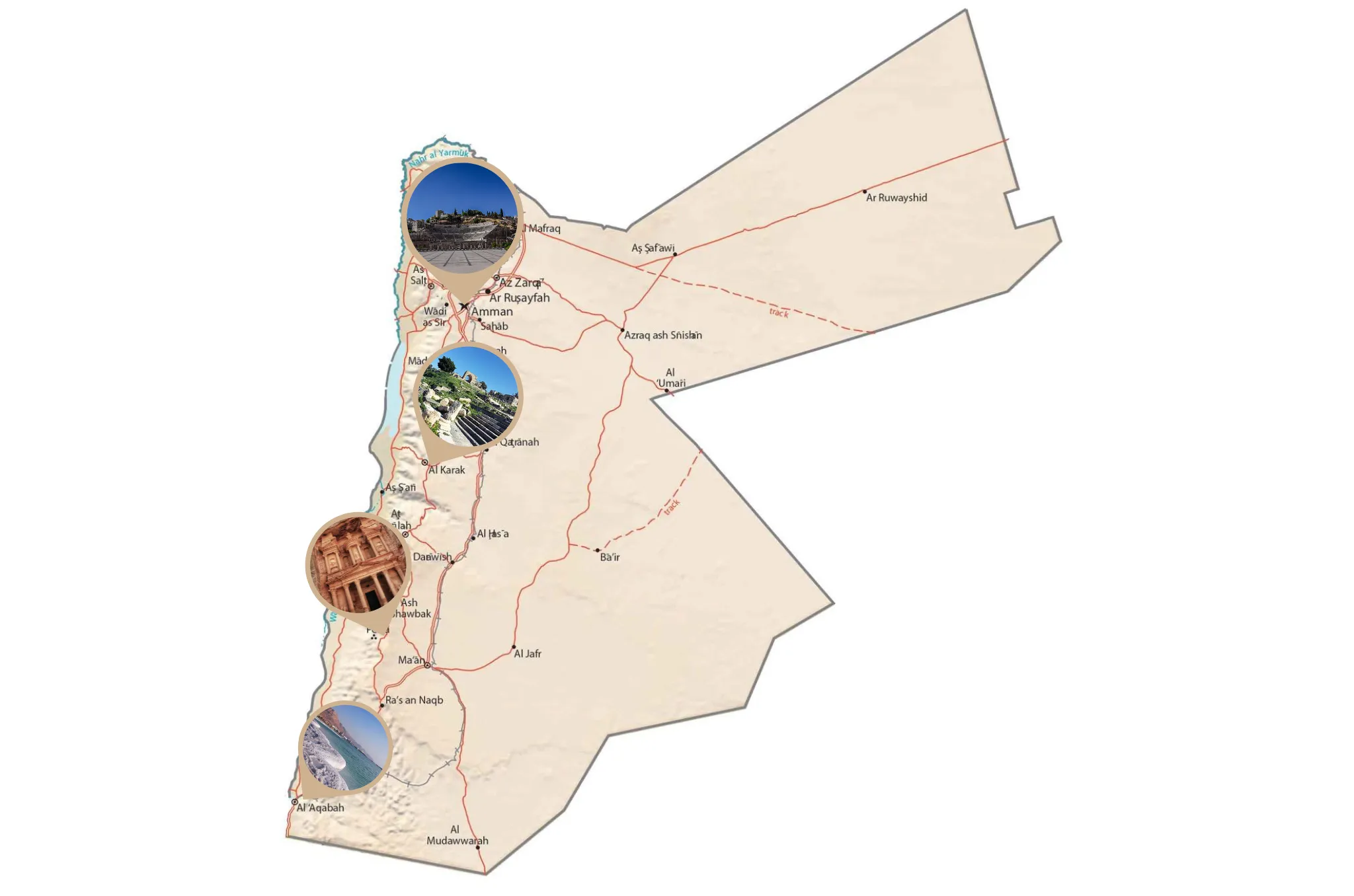
- Amman → Umm Qais: 110 km (1 hour 30–40 minutes)
- Irbid → Umm Qais: 25 km (30 minutes)
- Jerash → Umm Qais: 1 hour
- Ajloun → Umm Qais: ~50 minutes
Ideal for full-day tours combined with Jerash and Ajloun.
Why Visit Umm Qais with Jordan Address?
Visiting Umm Qais with Jordan Address connects you to the beauty and depth of ancient Gadara. You’ll wander through Roman ruins overlooking three countries, enjoy panoramic views, taste local northern flavors, and explore peaceful nature trails. It’s a journey that blends history, culture, and breathtaking landscapes into one unforgettable experience.