Petra, Jordan: The Complete Guide to Visiting the Rose City
Petra is the reason most people first think of Jordan. It was the capital of the Nabateans, an Arab trading people who carved their city into rose-coloured sandstone more than 2,000 years ago, and it has been a UNESCO World Heritage Site since 1985 and one of the New7Wonders of the World since 2007. At Jordan Address, Petra is on almost every itinerary we build, and it's the trip our guests ask us about most.
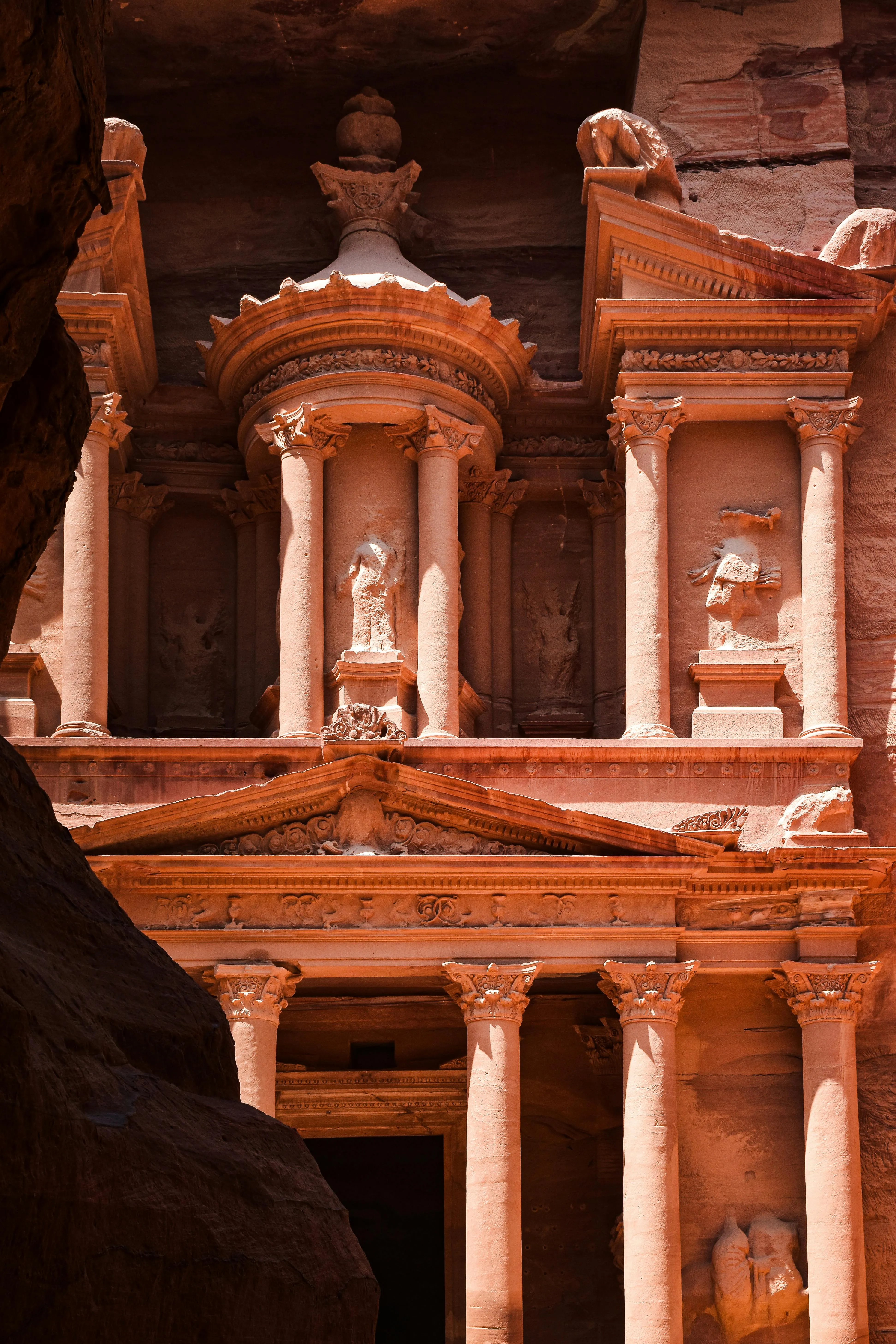
How you get there. You walk in through the Siq, a narrow gorge about 1.2 km long with sandstone walls rising on either side. It opens onto Al-Khazneh, the Treasury — the façade most people recognise from photos, carved directly into the rock face. Most first-time visitors stop here, take photos, and leave. That's a mistake: the Treasury is the entrance, not the destination.
What's beyond the Treasury. Petra covers a huge area, and most of it is easy to miss on a rushed visit. Past the Treasury, the path opens into the Street of Facades, the Roman-style Theatre, and the Royal Tombs. Further in and up a climb of more than 800 rock-cut steps is Ad-Deir, the Monastery — larger than the Treasury, far quieter, and for many of our guests the highlight of the day.
How much time to give it. One day lets you see the Treasury, the Theatre, and the Royal Tombs at a reasonable pace. Two days lets you also do the climb to the Monastery without rushing, and leaves room for Little Petra, a smaller, quieter Nabatean site about 15 minutes away that most day-trippers never see. This is why our 5-Day and longer itineraries build in two Petra days rather than one.
Petra by Night. On Sunday, Monday, Tuesday, Wednesday and Thursday evenings, the path through the Siq to the Treasury is lit by around 1,500 candles, and the visit ends with Bedouin music at the Treasury itself. It starts at 8:30 PM and runs about two hours. [CHECK: current ticket price — please confirm with PDTRA/our local team before this goes live, as entrance fees are set by the Petra authority and change periodically.] We can book this as an add-on to any Petra itinerary.
Entrance fees. As of now, foreign visitors staying overnight in Jordan pay for a 1, 2, or 3-day pass, and day-trippers who are not staying overnight in the country pay a higher single-day rate. If you're visiting Petra as part of a wider Jordan trip, the Jordan Pass usually works out cheaper than paying separately, since it also covers entry to other sites. We factor this into the proposals we send.
Best time to visit. Spring (March–May) and autumn (September–November) have the most comfortable daytime temperatures for the walk in and the climb to the Monastery. Summer visits are best done early morning, before the heat builds up in the Siq.
Petra is still a living place. Local Bedouin families run the tea stalls, camel and horse rides, and much of the hospitality inside the site — this isn't a museum you walk through, it's a community that still calls the valley home, and our guides can introduce you to people they've known for years.
Want to see Petra properly rather than rushing it in an afternoon? Tell us your dates and we'll build a Petra itinerary around them — or look at our ready-made tours that include Petra as a starting point.