Discover Petra, Jordan's timeless wonder carved into rose-red sandstone cliffs, where over 2,000 years of history, culture, and breathtaking architecture come together to create one of the world's most extraordinary destinations.
Quick Facts
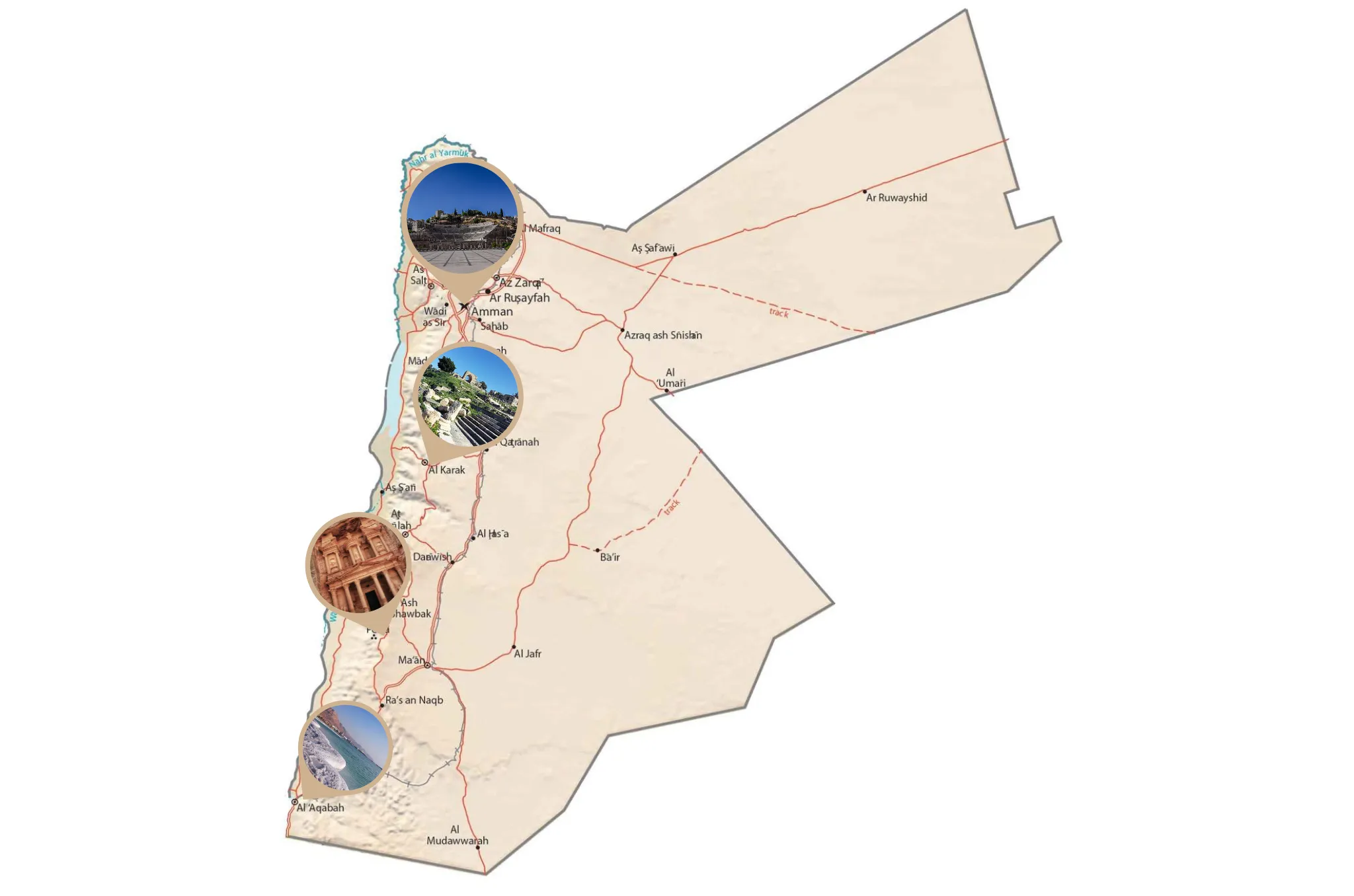
Location: Ma'an Governorate, Southern Jordan
UNESCO World Heritage Site: Since 1985
New Seven Wonders of the World: Since 2007
Distance from Amman: Approximately 235 km (3 hours by car)
Distance from Aqaba: Approximately 125 km (2 hours by car)
Recommended Visit: 1–2 full days
Difficulty Level: Easy to Moderate (depending on hiking routes)
Best Time to Visit: March–May and September–November
Perfect For: History lovers, adventure seekers, families, photographers, couples, and cultural travelers.
Overview
Hidden among the rugged mountains of southern Jordan, Petra is one of the world's most breathtaking archaeological treasures. Often called the Rose-Red City, Petra was carved directly into vibrant sandstone cliffs by the Nabataeans more than 2,000 years ago. Once a thriving center of trade connecting Arabia, Egypt, and the Mediterranean, Petra became one of the wealthiest cities of the ancient world.
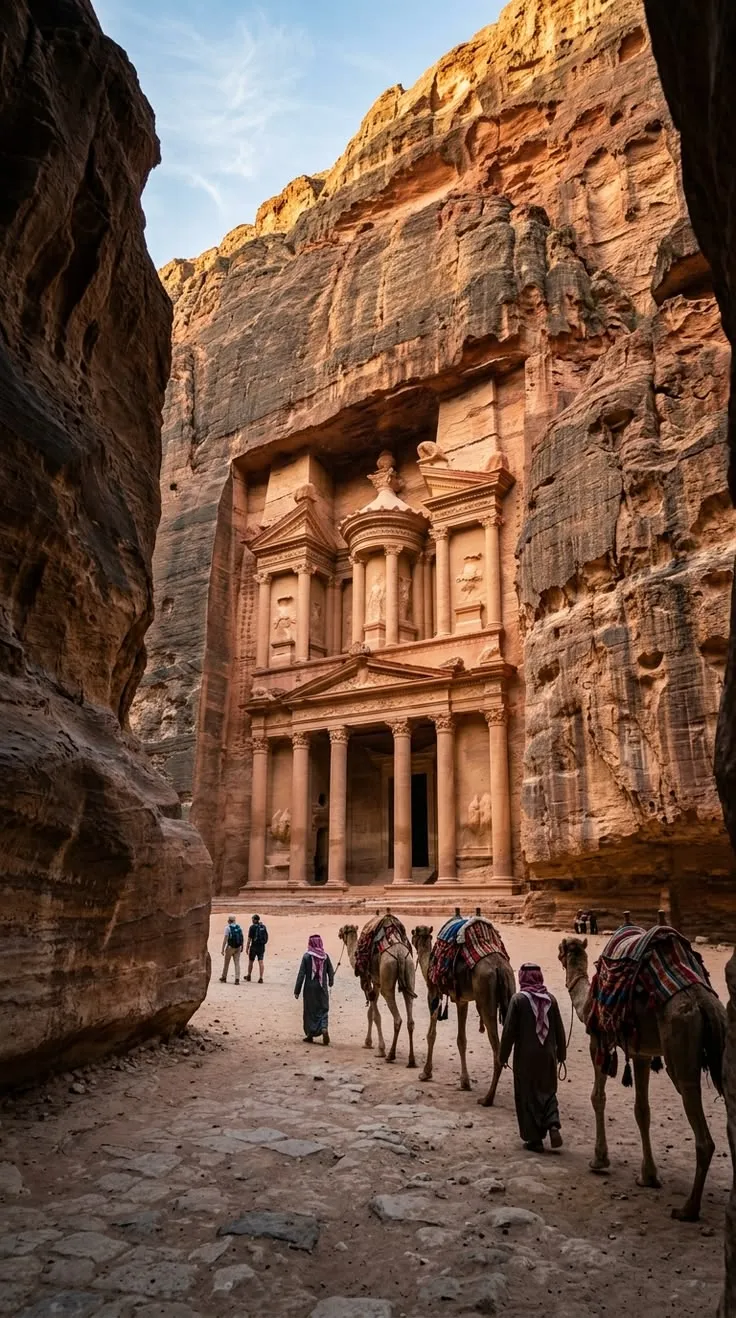
Today, Petra welcomes visitors from across the globe who come to admire its magnificent rock-cut monuments, dramatic landscapes, and fascinating history. Walking through the narrow Siq before catching your first glimpse of Al-Khazneh (The Treasury) is an unforgettable experience that has made Petra one of the world's most iconic travel destinations.
Whether you are passionate about archaeology, photography, hiking, or simply discovering places unlike anywhere else on Earth, Petra offers an adventure that combines history, culture, and natural beauty in one extraordinary destination.
History
Petra was established as the capital of the Nabataean Kingdom around the 4th century BC. The Nabataeans were skilled traders who controlled major caravan routes transporting incense, spices, silk, and precious goods between Arabia, Egypt, and the Mediterranean.
Their remarkable engineering skills allowed them to transform a desert valley into a prosperous city by developing advanced water management systems, reservoirs, and dams that supplied water throughout the year.
In 106 AD, Petra became part of the Roman Empire under Emperor Trajan. The city continued to flourish for centuries until changing trade routes and several earthquakes gradually reduced its importance.
For hundreds of years, Petra remained largely unknown to the Western world until Swiss explorer Johann Ludwig Burckhardt rediscovered it in 1812.
Recognized as a UNESCO World Heritage Site in 1985 and voted one of the New Seven Wonders of the World in 2007, Petra remains Jordan's most famous landmark and one of the world's greatest archaeological sites.
Top Attractions
The Siq
The Siq is Petra's dramatic entrance—a narrow natural canyon stretching approximately 1.2 kilometers through towering sandstone cliffs that reach heights of over 80 meters. As visitors walk through its winding passage, they encounter ancient water channels, carved niches, and colorful rock formations before arriving at Petra's most iconic monument.
Al-Khazneh (The Treasury)
The Treasury is Petra's most famous landmark and one of the most photographed monuments in the world. Standing nearly 40 meters tall, its beautifully carved sandstone façade amazes visitors with its intricate details and impressive scale. Despite its name, historians believe it was most likely built as a royal tomb rather than a treasury.
Street of Facades
This impressive avenue features dozens of beautifully carved Nabataean tombs that showcase the craftsmanship of Petra's ancient inhabitants. It offers a glimpse into the city's residential and ceremonial areas.
The Royal Tombs
Carved high into the mountainside, the Royal Tombs include the Urn Tomb, Silk Tomb, Corinthian Tomb, and Palace Tomb. Each displays unique architectural styles influenced by both Nabataean and Greco-Roman traditions.
The Great Temple
One of Petra's largest archaeological complexes, the Great Temple demonstrates the city's political and religious significance. Ongoing excavations continue to reveal remarkable discoveries about Nabataean civilization.
The Monastery (Ad Deir)
Larger than the Treasury, the Monastery is reached after climbing approximately 800 rock-cut steps. The reward is one of Petra's most spectacular monuments, surrounded by panoramic mountain views that make the journey worthwhile.
High Place of Sacrifice
For visitors seeking adventure, this hiking trail leads to one of Petra's highest viewpoints. Ancient ceremonial platforms and breathtaking views across the archaeological park make it a favorite among photographers.
Petra by Night
On selected evenings, visitors can experience Petra illuminated by thousands of candles. Walking through the candlelit Siq to the Treasury while listening to traditional Bedouin music creates a magical atmosphere unlike any daytime visit.
Things to Do
- Walk through the Siq and experience Petra's dramatic entrance.
- Visit the iconic Treasury and capture unforgettable photographs.
- Hike to the Monastery for spectacular panoramic views.
- Explore the Royal Tombs and ancient Nabataean architecture.
- Enjoy Petra by Night for a unique cultural experience.
- Visit the Petra Museum to learn about the city's rich history.
- Hike to the High Place of Sacrifice.
- Shop for authentic handmade souvenirs crafted by local artisans.
- Discover traditional Bedouin culture and hospitality.
Watch the sunrise or sunset over Petra's colorful sandstone mountains.
How to Get There
From Amman
Petra is approximately 235 kilometers south of Amman and can be reached in around three hours by car via the Desert Highway. It is one of the most popular day trips from the capital, although an overnight stay is recommended to fully experience the site.
From Aqaba
Located approximately 125 kilometers north of Aqaba, Petra is around a two-hour drive, making it an ideal excursion for travelers staying on the Red Sea coast.
From the Dead Sea
The journey from the Dead Sea takes approximately three hours by car and offers scenic views along the way.
Visitors can reach Petra by private transfer, rental car, organized tours, scheduled bus services, or chauffeur-driven transportation.
Best Time to Visit
Spring (March to May)
Spring offers pleasant temperatures, blooming wildflowers, and ideal conditions for hiking and sightseeing.
Summer (June to August)
Summer days can be hot, so early morning and late afternoon visits are recommended.
Autumn (September to November)
Autumn provides comfortable weather, fewer crowds, and excellent lighting for photography.
Winter (December to February)
Winter brings cooler temperatures and occasional rainfall. The softer light creates beautiful photographic opportunities and the site is generally quieter.
Nearby Attractions
- Little Petra (Siq al-Barid)
- Wadi Rum Protected Area
- Shobak Castle
- Dana Biosphere Reserve
Aqaba and the Red Sea
Travel Tips
- Wear comfortable walking shoes suitable for uneven terrain.
- Carry plenty of water, especially during warmer months.
- Begin your visit early to avoid crowds and midday heat.
- Plan at least one full day for your visit; two days are recommended.
- Bring sunscreen, sunglasses, and a hat.
- Stay on marked paths to help preserve the archaeological site.
Hiring a licensed local guide can greatly enhance your experience and understanding of Petra's history.
Frequently Asked Questions
Is Petra suitable for children?
Yes. The main visitor route is family-friendly, although some hiking trails require extra effort.
How long should I spend in Petra?
One full day is enough to explore the main highlights, while two days allow visitors to enjoy the site at a more relaxed pace.
Is Petra accessible for everyone?
The main route is accessible to many visitors, but some trails involve steep climbs, uneven surfaces, and numerous steps.
Can I visit Petra throughout the year?
Yes. Petra is open year-round, with spring and autumn offering the most comfortable weather conditions.
What should I wear?
Comfortable clothing, sturdy walking shoes, and sun protection are recommended throughout the year.
Experience Petra with Jordan Address
At Jordan Address Travel & Tourism, we believe Petra is more than just an archaeological site it is a journey through one of humanity's greatest achievements. Our experienced local guides, comfortable transportation, and carefully designed itineraries allow you to experience Petra's history, culture, and breathtaking landscapes in the most memorable way possible.
Whether you are planning a day trip or including Petra as part of a longer journey through Jordan, our team is dedicated to creating a seamless and unforgettable travel experience.